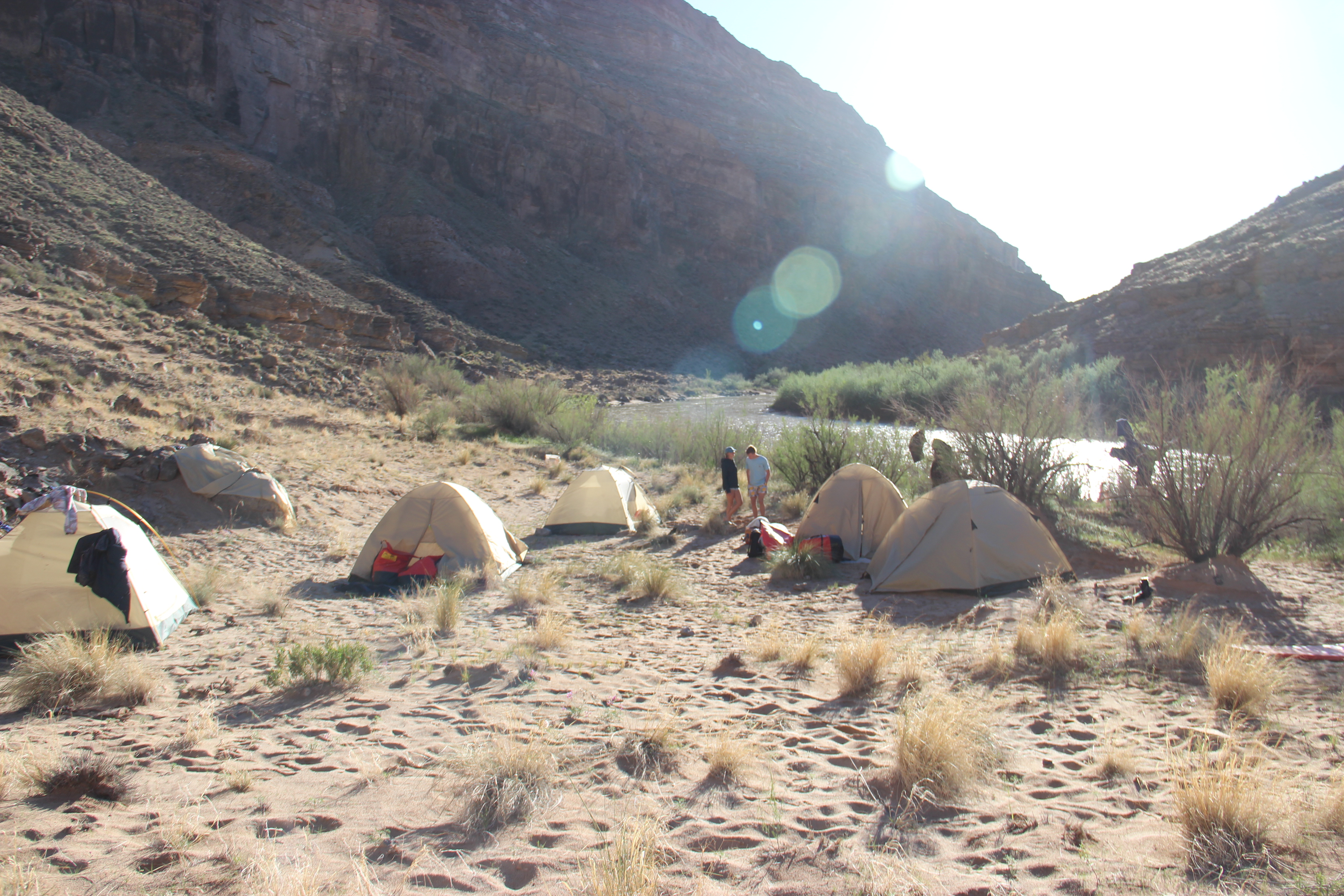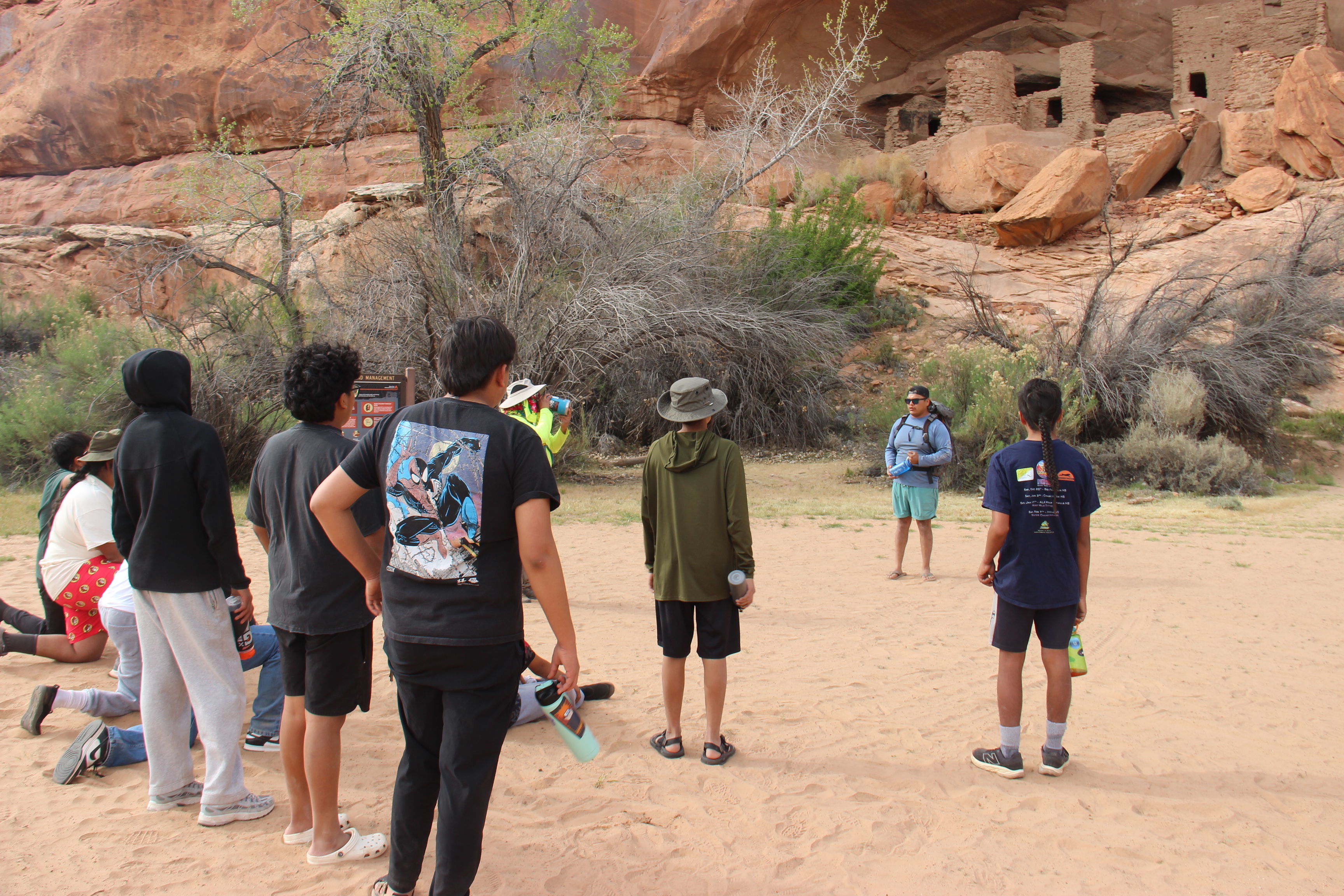

Springtime in the desert is exciting. It’s often the best time to visit the Bears Ears region – but it is also a time of rapid change; an already dynamic environment with the added possibility of swift weather changes during the brief space between winter’s chilly stillness and summer’s searing heat. Freshly burst-forth leaves swirl in the wind between showers of graupel and pockets of sunlight. This dynamism was on full display during Bears Ears Partnership’s inaugural Spring Break River Trip, which brought Indigenous and local San Juan County students out upon the San Juan River for three days in late March, a joint venture between Bears Ears Partnership’s new River Program and existing Education Program. Read more in this reflection from Education Specialist Carolyn Harmon.
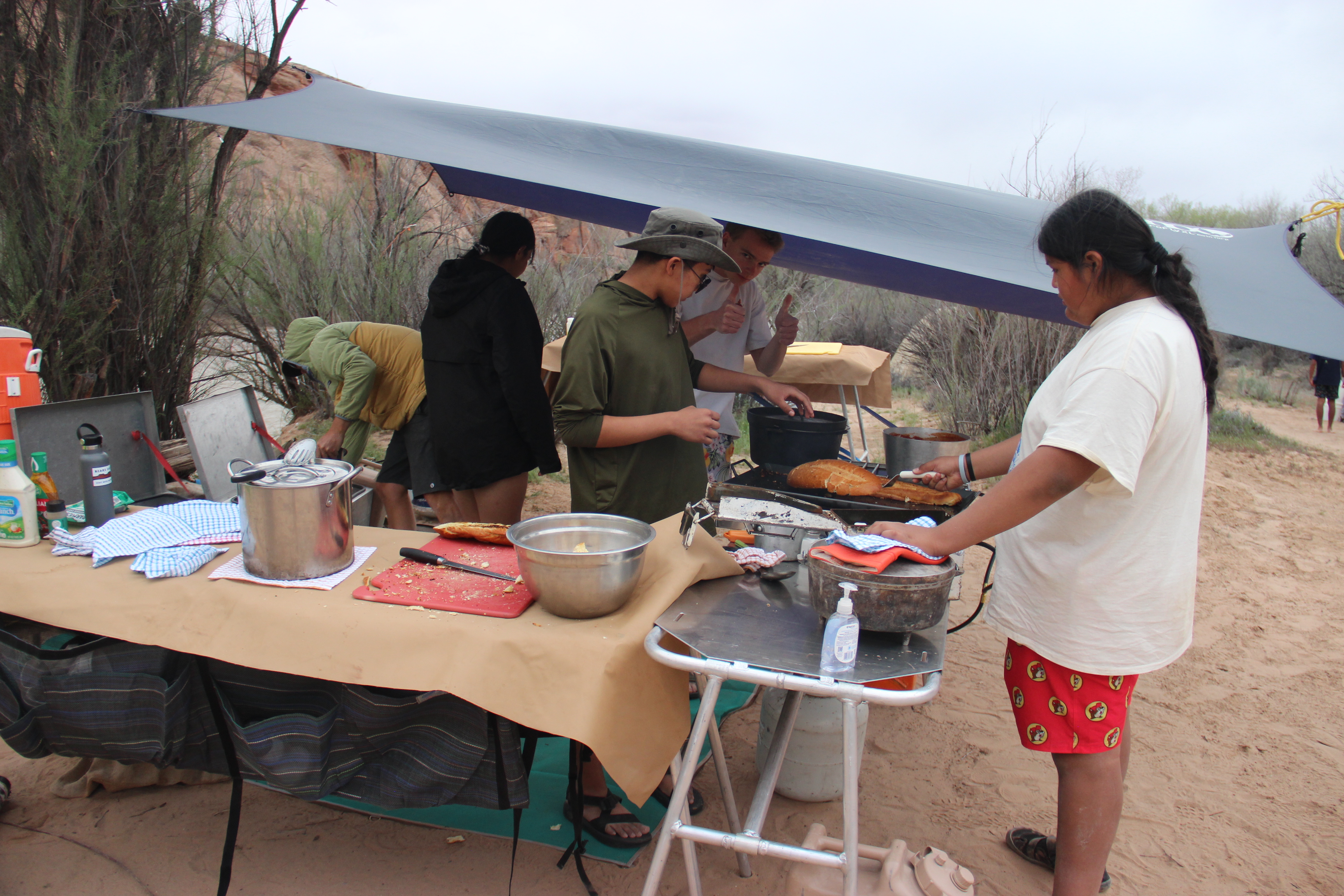 As lunch on day two was wrapping up, the breeze changed direction and pulled a student’s loose, translucent raincoat up into the air, along with a few other small lightweight items. It had rained steadily overnight and through the morning, with some gusty wind throughout. Now, students were clumped in the sunlight warming up between the passing cloud shadows, chicken caesar wraps and cookies in hand. The wind current continued out over the river with its captive items spiraling higher and higher as we watched from the shore. With suddenness, the funnel dissipated and air filled the hood and shoulders of the jacket causing it to fly directly headfirst upstream in a very ghost-like manner before plummeting into the current. “Well, that can’t be a good sign,” Alex, Bears Ears Partnership’s River Program Manager, and I both remarked then laughed. Shrugging, we returned to our tasks. Students and crew packed lunch away into the boats, loaded up, and set off downstream as clouds again enfolded the sun.
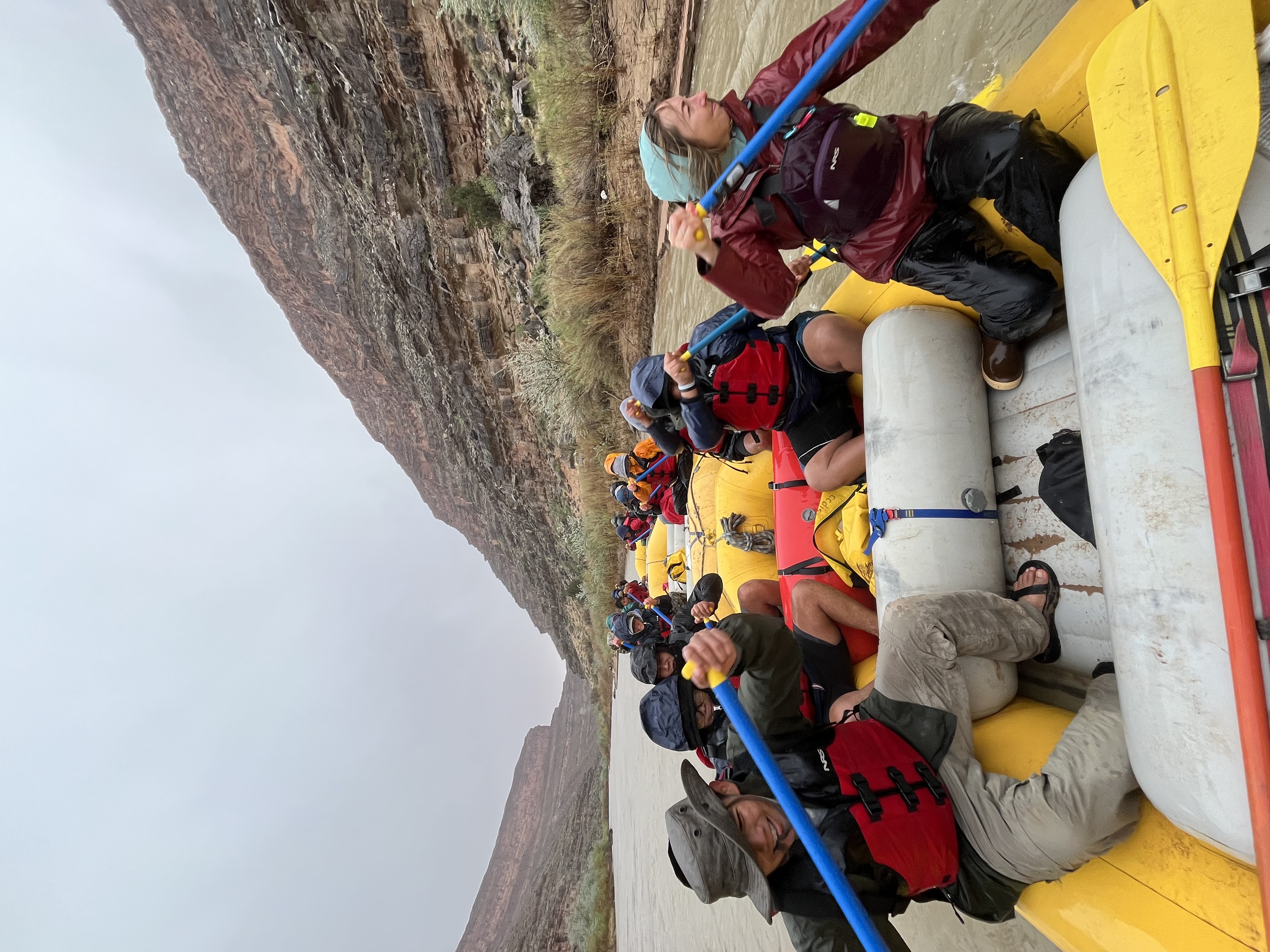
Minutes later, I wondered aloud at the strange look of the sky just as a single thunder clap echoed between the canyon walls. I exchanged looks with Hannah, the guide on my boat. The foreshadowing of the ghostly jacket fleeing from lunch flashed brightly across my mind, but I didn’t have time to call out to Alex. Within seconds, a wall of wind arrived and enthusiastically pushed the boats upstream towards shore. The rain followed, falling in theatrical buckets into the boats and onto the furiously paddling students.
“All forward!” guides shouted over the wind to their student paddlers. Despite their best efforts, the crafts bumped one after another into the beach. The guides and I hopped from the boats to anchor the crafts on shore, sinking into quicksand while wind and rain filled our hoods, ears, and sleeves. The wind spun between the sheer canyon walls, unable to choose a direction. As it shifted and began pushing the boats away from shore, the guides managed to link the three paddle boats to an oar boat to form a long snake of our boats and consolidate our efforts to continue downstream. Alex called instructions through the driving rain while the students paddled in unison and Eli rowed from the front. Despite the additional horsepower (kid-power?) we were unable to keep the boat centipede off the opposite rocky shore in the conditions. The guides pulled the straps to release the boats individually back into the squall. Laughter wove its way through the dancing air, and toothy grins sparkled beneath dripping hoods as wind flung the command “All forward!” towards the ears of the paddlers.
When we finally settled down at camp for the evening, in a circle before dinner, Alex asked the students what they were grateful for that particular day. The clouds had all dissipated and the sand of camp was dry, perhaps even sun-warmed, though pitted with the evidence of the earlier driving rain. The students wore dry clothing and breathed heavily from their recently completed game of tag. Unequivocally, they eulogized the storm and the heroism of the guides or the resilience of their fellow paddlers in the face of adversity. Their faces again glowed with smiles.
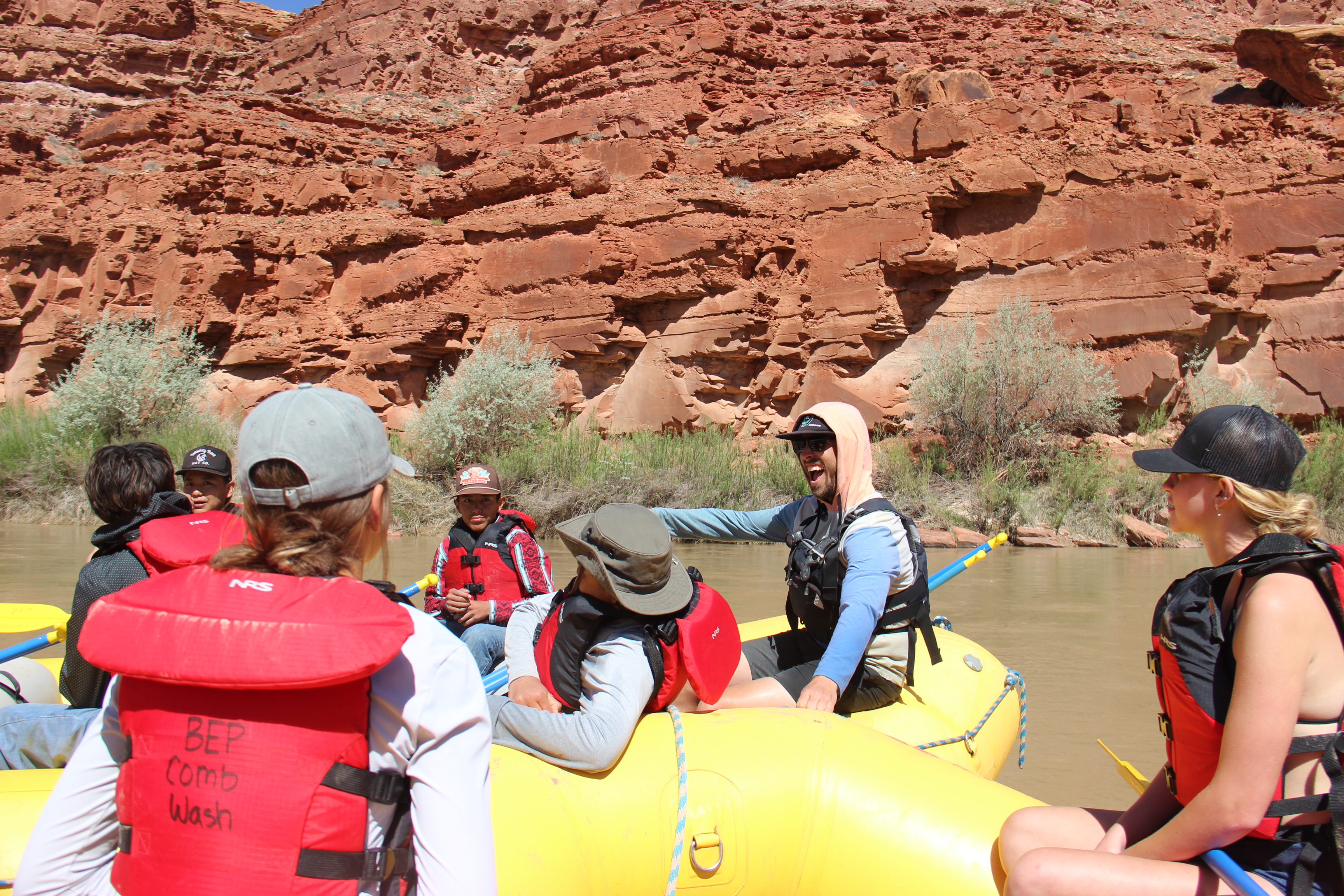
The next day, we gathered our boats into a mid-morning flotilla before landing at the take-out and asked the students for their “rock, stick, and raven” - something that rocked, something that will stick, and something or someone they want to rave about. They again shared dramatized retellings of the squall until our final beach drifted into view. Finally, as I turned students over to their parents after we’d returned to the Bears Ears Education Center later that afternoon, the storm was the first thing I heard mentioned as they slipped out of earshot.
Which is all to say: you can create elaborate and tasty meals, and map out lessons pertaining to specific locations along the trip route, and incite games or conversations amongst students, and huddle together around a toasty stove while the moonlight brightens canyon walls, but the thing that kids will think was the coolest part of the trip will be the experience you had absolutely no control over.